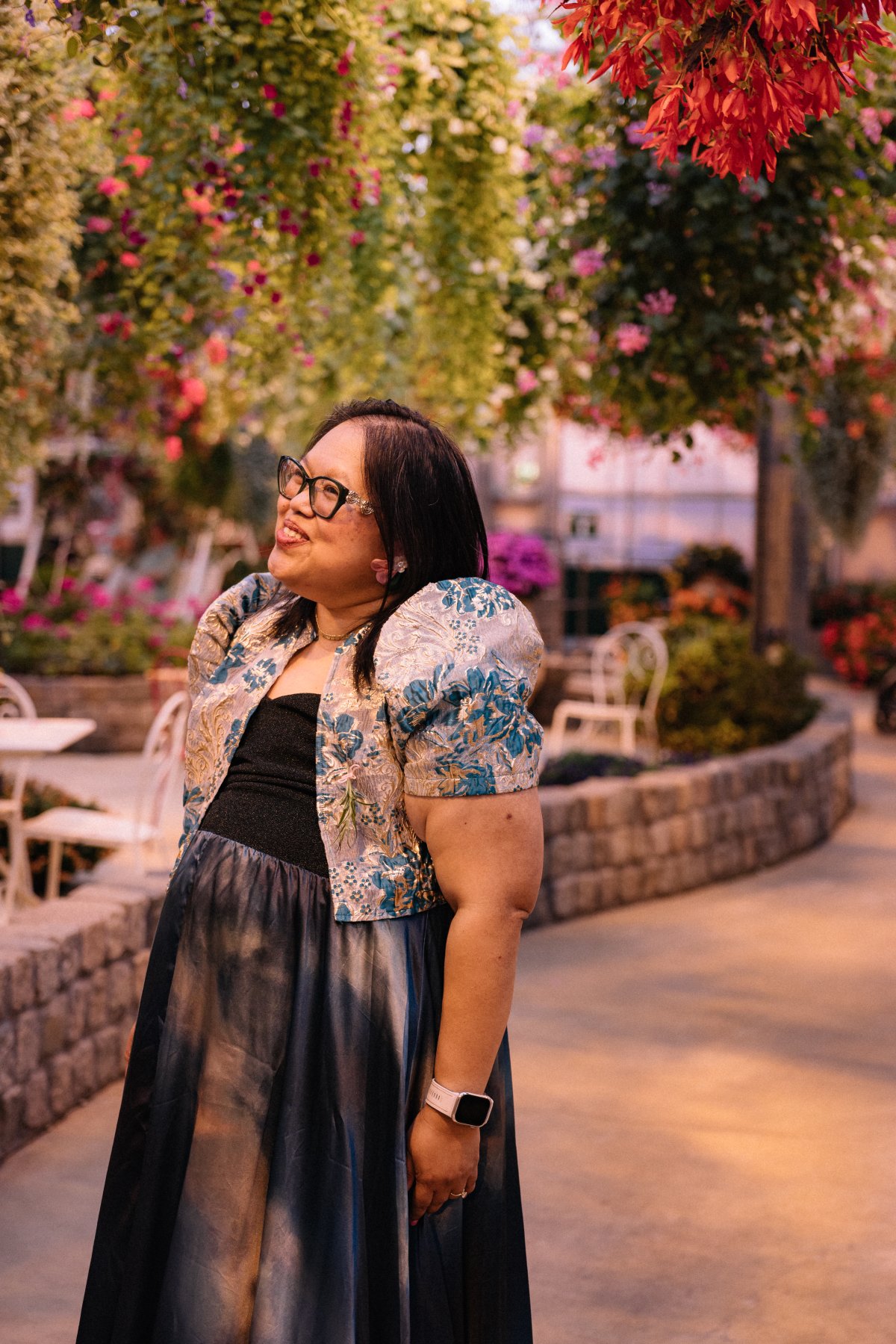
I am Lana Kristine Flores-Jelenjev: facilitator, writer, systems weaver, and companion to leaders and organizations working toward a more just world. For more than 20 years, I have held learning and healing spaces across cultures and continents. Today I accompany global leaders of international organizations and networks as they reimagine their organizations from the inside out.
My work weaves three ways of knowing. It is rooted in Sikolohiyang Pilipino (Filipino psychology) that understands the self not as separate, but as shared with others, as kapwa. It is informed by neuroscience and nervous system literacy, which show how stress, safety, and connection live in our bodies and shape how we lead. It is also held through a systems-weaving lens, which sees organizations as living webs of relationships, histories, and possibilities. Everything I offer, from how I listen in a room to how I accompany an organization through change, flows from where these three meet.
Where this work began: A remembering and re-membering
I come from a lineage of women who taught me to care deeply. They navigated ruptures with grace and showed, through devotion and generosity, what it means to be human. As a child, I told everyone I would become a doctor, not for the prestige, but because healing felt like a calling.
The path called me elsewhere. I tended my mother through her breast cancer journey, worked as a play therapist at the Philippine General Hospital, and served children in marginalized communities. Later came migration, motherhood, grief, and my own encounter with cancer. Each rupture became a rite of passage, and each taught me the same thing: my medicine was never clinical. It was being in "kapwa" and practicing "pakikiramdam" (deep sensing).
In new countries and international spaces, I noticed how often relational ways of knowing were treated as soft, or as less rigorous than Western frameworks. I had been taught, too, to see them that way. Healing from that colonial conditioning became part of my own work: a remembering and re-membering that the wisdom I carry is not a cultural decoration. It is a sophisticated psychology of shared humanity, and the world needs it.
Sikolohiyang Pilipino: A psychology of liberation from within
Sikolohiyang Pilipino emerged in the 1970s as an act of decolonization. Virgilio Enriquez and his colleagues asked a radical question: what if we understood Filipino people through our own language, experience, and values, rather than through borrowed Western frameworks?
At its center is kapwa, the shared self. Where many leadership models begin with the individual, kapwa begins with relationship: I am not separate from you, so your well-being and mine are bound together. From this root grow ways of sensing, relating, and acting that are deeply relevant to organizations seeking justice today.
This is why my work is liberatory at its core. Colonialism is not historical. It persists in the deepest fabric of the systems we have built: in whose knowing counts, in what gets called excellent and what gets called underdeveloped, in a psychology that treats the individual Western self as the default and kapwa as a cultural variation. Sikolohiyang Pilipino refuses that hierarchy. It reminds me that we cannot build liberatory systems with dysregulated bodies, and that inner work is communal work. What is needed is not merely correction but composting: the slow turning of inherited narratives into soil that can hold something new. One that is relational, embodied, and communal.
What I believe
Here are some guiding principles that inform my work and my convictions.
Healing happens in relation.
It is not an individual pursuit. It lives in witnessing, in being seen, in pakikipagkapwa: the sacred knowing that we are not separate. Kapwa teaches that we rise and heal together.
Wisdom and wounds travel together.
We are more than our suffering, and wisdom lives alongside our wounds. Every person, team, and community carries cultural, cognitive, and character strengths. Lasting change grows from these, not from deficit.
Small, aligned, self-full actions change systems.
Like a pebble stirring ripples in a still pond, change rarely begins with grand declarations. It begins with the quiet courage of acting from wholeness. This invites us to scale not only in breadth and width, but, importantly, in depth.
Settled bodies settle bodies. Settled bodies settle systems.
We cannot build liberatory systems with dysregulated bodies. How we tend our own nervous systems ripples outward into our teams, organizations, and the communities we serve.
Trauma resides across generations. Healing happens in one.
What we metabolize now becomes the nervous system that the next generation starts from. The work we do now reverberates through multiple pasts and multiple futures.
Inner work is communal work.
If the environment keeps depleting a person, no amount of solitary practice can fix it. The field we heal within is never just for one person.